Samosir Island Itinerary: 2 Days by Private Car
Samosir Island sits in the middle of Lake Toba, the largest volcanic lake in the world, and it remains one of the most rewarding — and most underrated — destinations in Southeast Asia. Ringed by cool highland air, Batak stilt houses, and water so still it mirrors the surrounding hills, Samosir rewards travelers who take their time rather than rush through on a day trip from Medan.
The problem most foreign visitors run into isn’t finding out what to see. Blogs and guidebooks list Tomok, Ambarita, Simanindo, and Tuk Tuk clearly enough. The real problem is logistics: getting from Medan or Kualanamu Airport to Parapat, crossing the lake by ferry with a car, timing that crossing so it doesn’t eat half a travel day, and then getting between villages once you’re actually on the island — all without a local driver who speaks English or understands what a foreign guest actually wants to see.
This is where a two-day itinerary built as a single connected trip, rather than a car rental plus a set of guesses, makes the difference.
Why “Just a Car” Isn’t Enough on Samosir
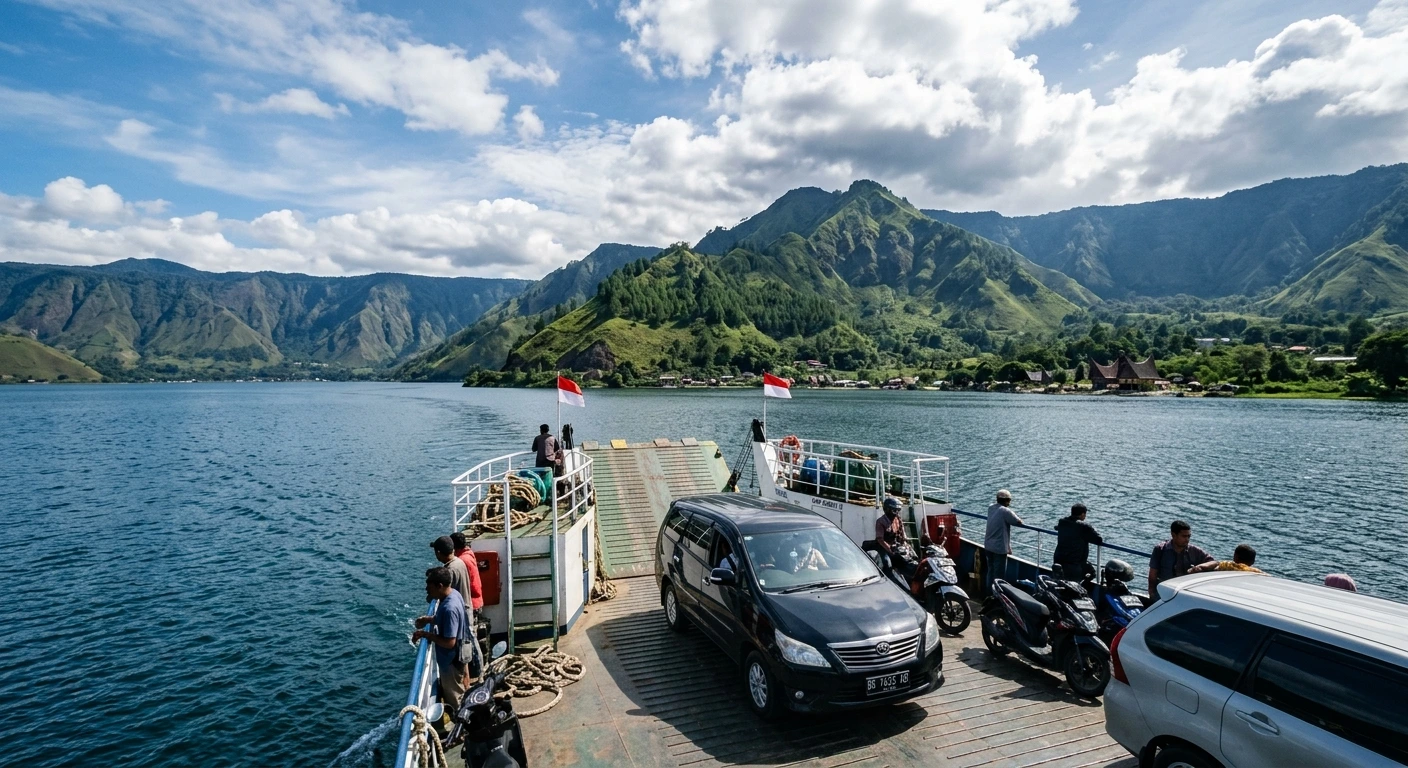
A car alone gets you to Parapat. It does not get you across Lake Toba. Samosir Island is reached either by a roughly 50-minute vehicle ferry from Parapat, or by a much longer land route around the north side of the lake through Pangururan. Most travelers — and most itineraries — assume the ferry, because it’s faster and it’s part of the experience: watching the volcanic caldera slide past from the deck is one of the best moments of the whole trip.
But the ferry has its own rhythm. Schedules shift with demand and season, vehicle loading takes time, and if you arrive at the dock at the wrong hour with the wrong plan, you can lose two or three hours you didn’t budget for. A driver who only knows “point A to point B” transfer routes won’t necessarily know how to time this crossing around your itinerary. This is exactly why treating the trip as a bundled product — car, driver, ferry timing, and a real itinerary — works better than booking a car and figuring out the rest on the island.
That’s the model KAMAL RENT (kamalrentmedan.com) builds its Samosir packages around: not a car handed over at the airport, but a full two-day route with the ferry crossing, village stops, and return leg planned as one trip.
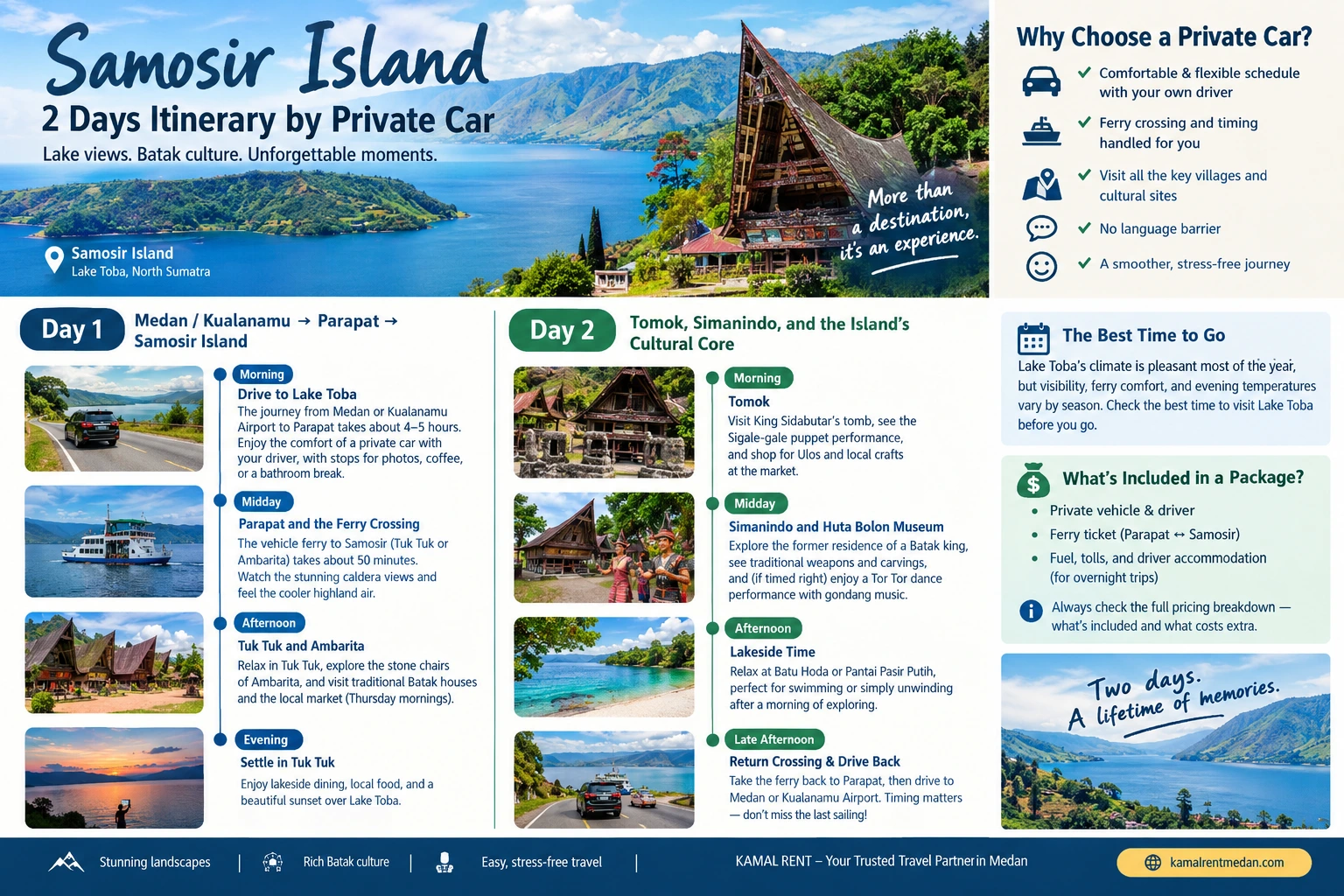
Day 1: Medan / Kualanamu Airport → Parapat → Samosir Island
Morning: Pickup and the drive to Lake Toba The journey from Medan or Kualanamu International Airport to Parapat takes roughly four to five hours by road, depending on traffic through Pematangsiantar. This is the part of the trip where the choice between a rental car, a shared minivan, or a public bus becomes the deciding factor in how comfortable the day feels — a private car with air conditioning and a driver who can stop for photos, coffee, or a bathroom break without negotiation is a very different experience from a crowded public option.
For travelers who want to confirm exactly who is behind the wheel, it’s worth checking that the operator’s drivers and vehicles are properly registered — see licensed car rental in Medan for what that actually means in practice, since “licensed” gets used loosely by informal operators around the airport.
Midday: Parapat and the ferry crossing Parapat is the mainland gateway to Samosir, and the vehicle ferry across to Tuk Tuk or Ambarita takes about 50 minutes. This is one of the most photogenic legs of the whole itinerary — Lake Toba’s caldera walls rising on both sides, fishing boats crossing your wake, the temperature noticeably cooling as you gain elevation on the way. Because ferry departures depend on vehicle loads and time of day, this is exactly the segment where a pre-planned trip beats an improvised one: a driver who books the crossing as part of the package avoids the wait that catches unprepared travelers off guard.
Afternoon: Tuk Tuk and Ambarita Once on the island, most visitors base themselves around Tuk Tuk, the small peninsula that has become Samosir’s main hub for guesthouses, lakeside cafés, and evening views. From there, a short drive brings you to Ambarita, home to the stone chairs where Batak kings once held trials — a striking, slightly grim piece of pre-colonial history that gives real texture to the visit. Ambarita’s traditional wooden houses are worth a slow walk, and the village hosts a local market on Thursday mornings if your dates line up.
Evening: Settle in Spend the evening at your accommodation in Tuk Tuk. Several lakeside spots serve simple Indonesian food alongside more traveler-friendly menus, and the sunset over the water — with the mountains of the mainland silhouetted behind — is one of the reasons people extend their stay beyond a single night.
Day 2: Tomok, Simanindo, and the Island’s Cultural Core
Morning: Tomok Tomok is Samosir’s most-visited village and the traditional gateway for ferry arrivals from Parapat. It’s home to the tomb of King Sidabutar, an above-ground stone tomb complex unusual for not being buried beneath the soil, and to regular cultural performances featuring the Sigale-gale, a wooden puppet historically used in Batak funeral rites. Tomok’s market street is also the best place on the island to pick up Ulos, the handwoven ceremonial cloth of the Batak people, along with wood carvings and other souvenirs.
Midday: Simanindo and the Huta Bolon Museum About thirty minutes further north, Simanindo is home to the Huta Bolon Simanindo Museum, set in the former residence of a Batak king. The museum displays traditional weapons, carvings, and household items, and — timing depending — hosts live Tor Tor dance performances accompanied by gondang music. This stop pairs well with a private car itinerary because the museum’s performance schedule is fixed to specific times of day, and a driver working from a planned route can get you there when something is actually happening rather than to an empty courtyard.
Afternoon: Lakeside time The northern end of the island near Simanindo has some of Samosir’s better beaches, including Batu Hoda and Pantai Pasir Putih, both easygoing spots for swimming or simply resting after two mornings of village-hopping. Travelers who want a slower pace often build in an hour here before heading back toward the ferry.
Late afternoon: Return crossing and drive back The return trip mirrors Day 1 in reverse: ferry back to Parapat, then the drive back to Medan or Kualanamu Airport. Because this leg happens later in the day, timing the ferry correctly matters even more — missing a return sailing by half an hour can mean a much later arrival back in Medan than planned.
The Ecosystem, Not Just the Ride
What separates a good Samosir trip from a frustrating one usually isn’t the destinations — the villages, the museum, the lake itself are fixed points that every guide agrees on. It’s whether the transport, the ferry timing, and the order of stops are planned as one connected system, or left for the traveler to piece together after landing tired at Kualanamu.
That’s the reasoning behind treating a Samosir trip as a bundled product rather than a bare car rental: a private vehicle, an English-speaking or English-comfortable driver, a ferry crossing booked into the schedule, and a route sequenced so museum visits, market days, and photo stops actually line up with when things are open and happening. It’s the difference between “here’s a car, good luck” and a trip that runs the way it looks on paper.
Planning the Trip: Timing and Cost
Two details matter more than most others when foreign travelers plan this route.
When to go. Lake Toba’s climate is shaped by elevation as much as by Indonesia’s wet and dry seasons, and conditions on the water — visibility for photos, ferry comfort, how pleasant the cooler evenings feel — shift noticeably across the year. It’s worth reading through the best time to visit Lake Toba before locking in dates, especially if this two-day Samosir loop is part of a longer Sumatra itinerary.
What it costs. Foreign travelers booking car rental in Indonesia for the first time often run into vague quotes that don’t clarify what’s included — fuel, driver accommodation for overnight trips, the ferry ticket itself, tolls. A transparent pricing structure that spells out exactly what a two-day Samosir package covers avoids the awkward renegotiation that sometimes happens mid-trip with informal operators.
Final Thoughts
Samosir Island doesn’t need to be complicated. Tomok, Ambarita, Simanindo, and Tuk Tuk are close enough together that two focused days cover the essentials comfortably, with room left over for a beach afternoon or a slower coffee morning by the lake. The part worth getting right is everything in between the sights: the ferry timing, the driver, the sequencing of stops. Book the trip as one connected itinerary rather than a car and a set of directions, and Samosir turns from a logistics puzzle into what it’s actually meant to be — one of the calmest, most memorable stops in North Sumatra.
Frequently Asked Questions
How long does the ferry crossing to Samosir Island actually take? The vehicle ferry from Parapat to Samosir (Tuk Tuk or Ambarita) takes about 50 minutes. Add loading time on both ends, so budget roughly 1.5–2 hours door to door for the crossing itself.
Can I skip the ferry and drive around to Samosir instead? Yes — there’s a land route via Pangururan on the north side of the lake, but it adds several extra hours of driving compared to the ferry, and it’s usually only worth it if you’re specifically routing through Pangururan or Pusuk Buhit for other reasons.
Is two days enough to see Samosir Island properly? Two days comfortably covers Tomok, Ambarita, Simanindo, and time in Tuk Tuk, which is the core loop most first-time visitors want. If you’d rather add a beach afternoon, a hike, or a slower pace, three days gives more breathing room — but two days by private car is enough to not feel rushed.
Do I need to rent a separate boat, or is the ferry enough? The vehicle ferry gets your car and driver onto the island, which covers all the village-to-village driving in this itinerary. A separate small boat is only worth arranging if you want to reach specific lake-only points — like Situmurun Waterfall — that aren’t accessible by road.
Will my driver speak English? This is worth confirming directly with whichever operator you book with, since it varies a lot between informal drivers at the airport and operators who specifically serve foreign travelers. It’s one of the details covered under licensed car rental in Medan.
What’s included in a two-day Samosir car rental package, and what costs extra? This differs by operator, which is exactly why it’s worth checking a transparent pricing breakdown before booking — fuel, tolls, the ferry ticket, and driver accommodation for the overnight leg are the items most likely to be quoted separately if they aren’t already bundled in.
When is the best time of year to do this itinerary? Lake Toba is pleasant most of the year given its elevation, but visibility, ferry comfort, and evening temperatures shift across the seasons. See the best time to visit Lake Toba for a season-by-season breakdown before locking in dates.

Maidar Ferianto adalah lulusan Magister Manajemen Pemasaran dari salah satu universitas di Medan dengan latar belakang teknik mesin dan pengalaman nyata di industri CRM, pembiayaan kendaraan, dan logistik. Tulisannya di kamalrentmedan.com lahir dari pemahaman langsung tentang kendaraan dan perilaku pelanggan. Membantu Anda memilih layanan yang benar-benar sesuai kebutuhan, bukan sekadar yang paling murah.