Top 10 Things to Do Around Lake Toba (With a Driver)
The first time most foreign travelers see Lake Toba, they stop talking. It is hard not to — this is the largest volcanic lake on Earth, sitting inside a caldera so massive it once changed the planet’s climate. But once the initial “wow” fades, a more practical question shows up: how do you actually get around a lake this size, and see the things worth seeing, without wasting half your trip on logistics?
Why a Driver in Toba Is Really “Half a Guide”
Ask any traveler who has road-tripped around Lake Toba and you’ll hear the same thing: the driver ends up being far more than someone behind the wheel. Roads wind through highland villages with no clear signage, opening hours for cultural sites shift with the season, and half the best spots — a warung with the best arsik fish, a quiet cliffside view no map marks — only exist in local knowledge.
This is the behavior pattern worth understanding before you book anything: foreign visitors to Toba don’t just want a car, they want reassurance. They’re navigating an unfamiliar language, unfamiliar road etiquette, and a cultural landscape (Batak customs, clan histories, animist-Christian syncretism) that’s genuinely hard to research from a hotel room in Jakarta or Singapore, let alone from abroad. A driver who can explain what a sigale-gale puppet means, or why a particular stone chair in Ambarita has such a dark history, quietly turns a transport service into something closer to a private guide — without the guide’s price tag.
That expectation is exactly what shapes a good Lake Toba itinerary. Before diving into the list, it helps to check the best time to visit Lake Toba, since road conditions and ferry schedules around the caldera shift noticeably between the dry and rainy seasons.
Cross to Samosir Island by Ferry
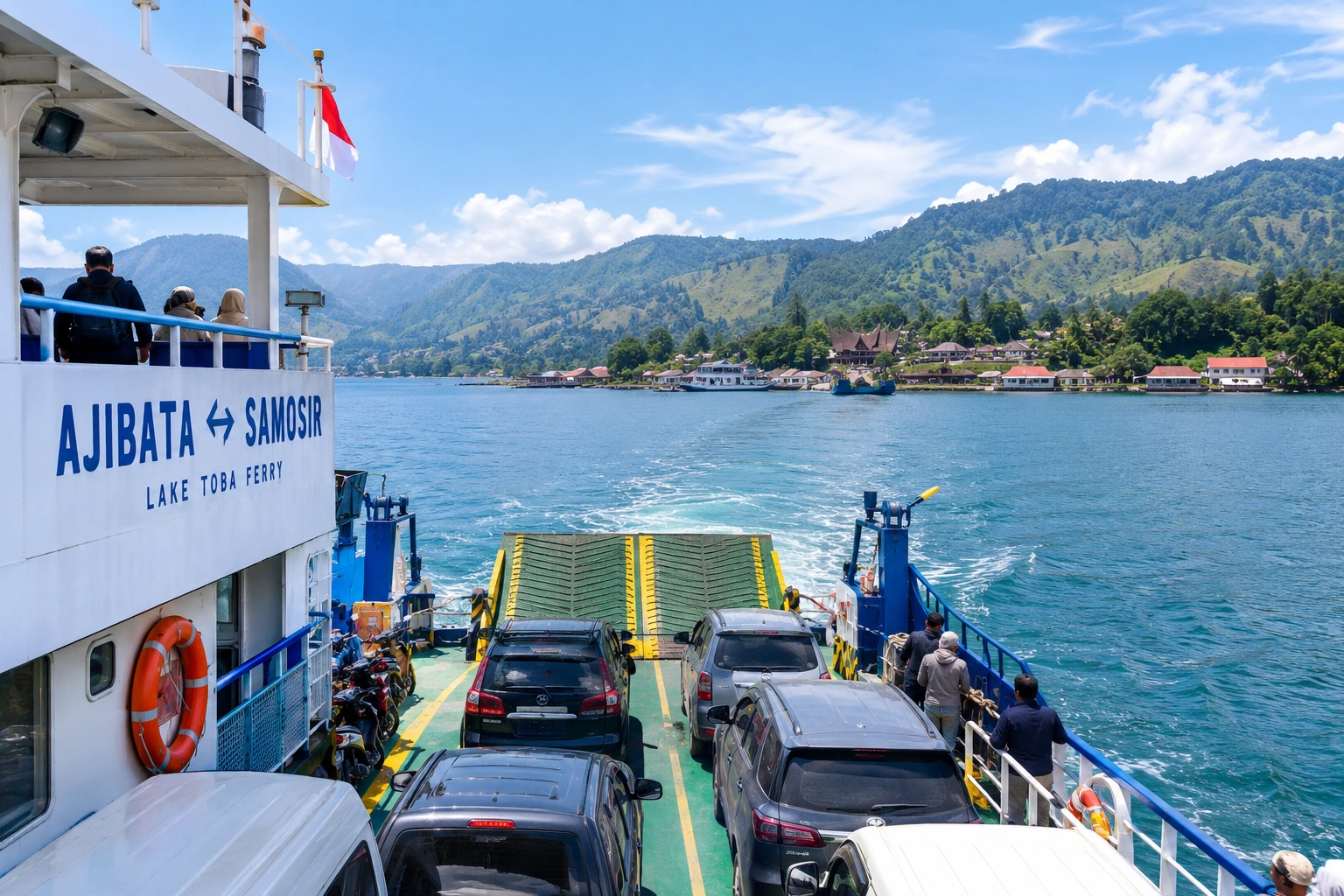
Most Lake Toba itineraries begin here, and for good reason. Samosir isn’t just an island in the lake — locals will tell you it’s the ancestral heart of Batak culture. The short ferry ride from Ajibata to Tomok already sets the tone: cool mountain air, water so still it mirrors the caldera walls, and small motorbikes weaving past you onto the boat. A driver who knows the ferry timetables can save you an easy hour of standing around, which matters more than it sounds on a single-day loop.
Tomok Village — Batak Kings’ Tombs and Market
Tomok is usually the first stop on Samosir, and it works as a gentle introduction to Batak heritage. The stone sarcophagi of Batak kings sit just off the main path, carved with symbols that a knowledgeable driver can actually translate for you — most signage is in Indonesian only. The adjoining market is touristy but genuine, selling ulos cloth, wood carvings, and Batak coffee that’s worth bringing home.
King Siallagan’s Stone Chairs, Ambarita
A short drive north of Tomok, Ambarita holds one of Toba’s more unsettling attractions: a circle of stone chairs once used for tribal trials, allegedly followed by public executions. It sounds grim written down, but in person it’s a fascinating, well-preserved window into pre-colonial Batak governance. This is a spot where a driver’s storytelling genuinely changes the experience — the difference between “old stones” and understanding exactly what happened there.
Simanindo Museum and the Sigale-gale Dance
Further along the western coast, Simanindo houses a restored Batak king’s house turned museum, along with regular performances of the sigale-gale — a wooden puppet traditionally used in mourning rituals, now animated for visitors in a lively, slightly eerie dance. Performance times vary by season and tour-bus traffic, so this is another stop where checking ahead (or trusting a driver who already knows the schedule) saves real frustration.
Tuk Tuk Peninsula — Slow Down by the Lake
Tuk Tuk is where most travelers base themselves, and it’s worth carving out unstructured time here rather than treating Toba purely as a checklist. Lakeside cafés, small guesthouses, and quiet swimming spots line the peninsula. If your driver has dropped you here for a night or two, this is a natural point to look at their transparent pricing for car rental in Medan before deciding whether to extend the vehicle for the rest of the loop.
Lumban Suhi-suhi — Watch Ulos Weaving
A quieter, less-visited village on Samosir, Lumban Suhi-suhi is where much of the region’s ulos — the traditional woven cloth central to Batak ceremonies — is still made by hand on backstrap looms. It’s not a polished tourist stop, which is exactly its appeal. Foreign visitors who ask to watch the weaving process are usually welcomed warmly, especially when a driver who knows the family can make the introduction.
Sipiso-piso Waterfall
On the northern side of the caldera, Sipiso-piso drops roughly 120 meters down a sheer volcanic wall into the valley below, with Lake Toba visible in the distance. The viewpoint near the top requires almost no walking, while the trail to the base is steep and better suited to travelers with time and decent footwear. Either way, it’s consistently rated among the most dramatic things to do around Lake Toba, and photographs poorly convey how loud and powerful the falls actually are up close.
Bukit Holbung — Sunrise on the “Teletubbies Hills”
Nicknamed for its rolling green hills, Bukit Holbung has become a favorite sunrise hike for younger travelers, offering a sweeping view over Samosir and the lake below. The climb is roughly 30–45 minutes, manageable for most fitness levels, but it means a very early pickup — another reason travelers lean on a driver who’s done the run before and knows exactly when to leave.
Tele Viewpoint (Menara Pandang Tele)
For a genuinely different perspective on Toba, the Tele viewpoint sits high above the western shore, looking down over the full sweep of Samosir Island and the caldera walls beyond. It’s a popular stop on longer Samosir loops, and pairs naturally with a wider circuit of the island — the kind of route mapped out in this Samosir Island itinerary for travelers who want to see more than the standard day-trip highlights.
Pangururan Hot Springs
After days of hiking, villages, and winding roads, the natural hot springs near Pangururan — fed by volcanic activity from the same supervolcanic system that formed the lake itself — offer a genuinely restorative finish. Several low-key public and semi-private pools sit right along the lakeshore, popular with both local families and travelers winding down their trip.
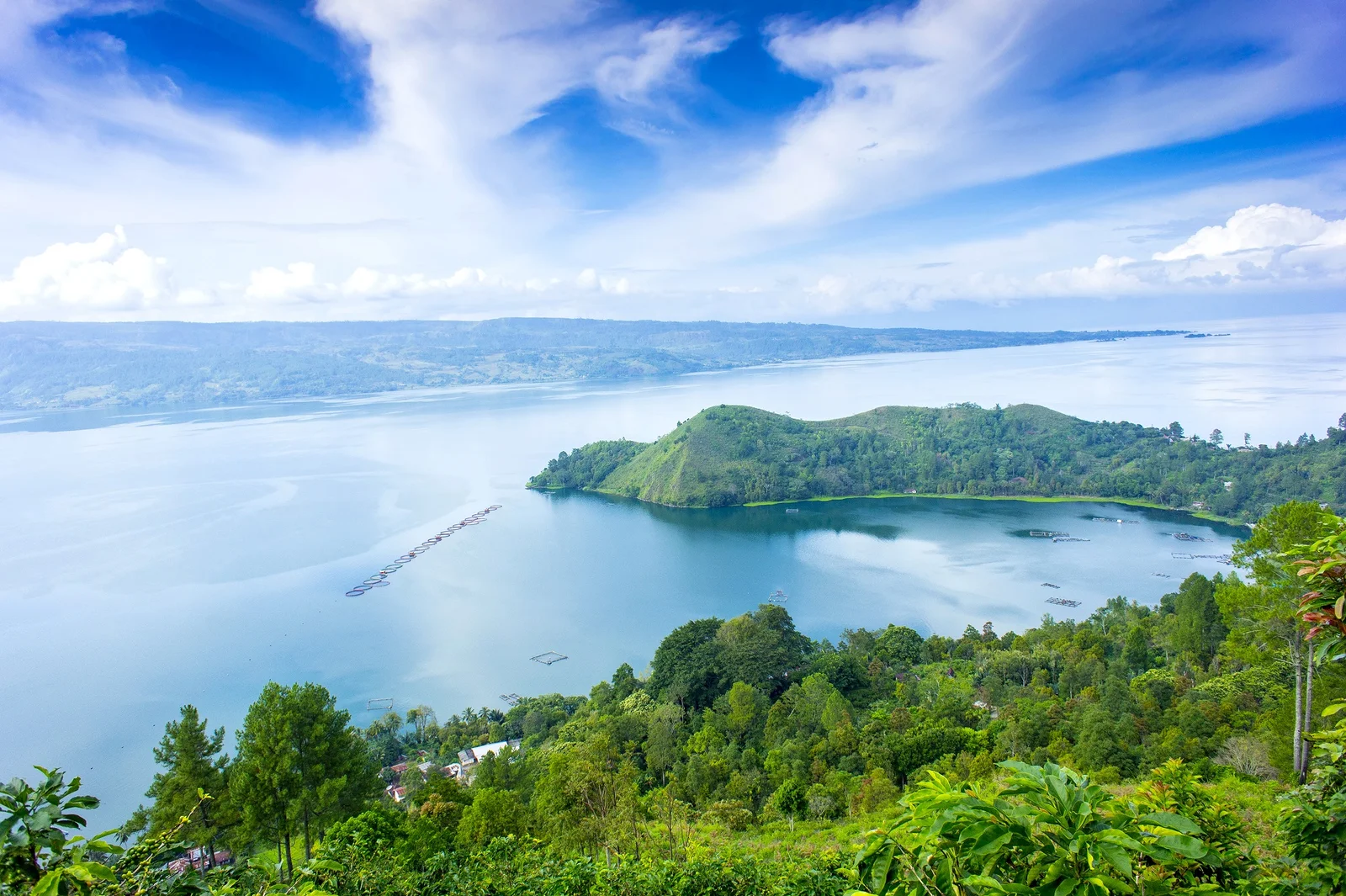
Between stops, distances around the lake are easy to underestimate. Toba’s shoreline stretches over 100 kilometers end to end, and the roads climbing in and out of the caldera are winding, occasionally narrow, and shared with motorbikes, livestock, and the odd unmarked speed bump. What looks like a 20-minute drive on a map can easily take twice that. This is less a warning than a planning note: build slack into each day, and let your driver adjust the order of stops based on weather, ferry timing, or a village festival you didn’t know was happening.
What This Means for How You Plan the Trip
None of this is a coincidence. Lake Toba’s appeal doesn’t sit in one single site — it’s spread across a wide, unevenly signed region where cultural context (Batak clan history, ceremonial customs, traditional practices still visible in daily village life) matters as much as the scenery itself. That’s precisely why most foreign visitors, even confident independent travelers, end up wanting a driver who can also explain, translate, and recommend — rather than a bare rental car with a map.
The Bottom Line
Lake Toba rewards travelers who move slowly and let a local point them toward what a map can’t show. Rushing it with a self-drive car and no local input usually means missing half of what makes the region worth visiting — the stories behind the stone chairs, the right time to catch the sigale-gale, the quiet weaving village most tourists never find. The fix is simple: hire a car and driver who already treats the job as part-guide, part-transport, and build your itinerary around their local knowledge rather than a generic checklist.
Ready to plan your own route around the lake? Kamal Rent Medan offers private car and driver services from Medan to Lake Toba, with drivers who know the region well enough to make your trip feel guided, not just chauffeured.
Kamal Rent Medan contact / Click WhatsApp.
Frequently Asked Questions
Do I really need a driver to visit Lake Toba, or can I rent a self-drive car? Self-drive is possible, but most foreign visitors underestimate how winding and poorly signed the roads around the caldera are. A driver who already knows the route, ferry schedules, and village etiquette usually saves more time than the cost of hiring one — and doubles as an informal cultural guide along the way.
How many days do I need to see the main sights around Lake Toba? Two to three days is realistic if you want to cover Samosir Island properly plus Sipiso-piso Waterfall and Bukit Holbung. A rushed one-day loop is possible but means skipping most of the cultural stops.
When is the best time to visit Lake Toba? Dry season generally makes road travel and ferry crossings smoother. For a month-by-month breakdown, see this guide to the best time to visit Lake Toba.
Do drivers around Lake Toba speak English? Many drivers working with travelers regularly, including Kamal Rent Medan’s team, speak conversational English — enough to explain historical sites, negotiate entry fees, and handle everyday logistics. It’s still worth confirming language comfort when booking.
How much does it cost to hire a car and driver from Medan to Lake Toba? Pricing depends on trip duration, vehicle type, and distance covered. Kamal Rent Medan publishes a transparent pricing breakdown so travelers can compare options before booking.
Is Samosir Island worth a full day on its own? Yes — most travelers who try to “do” Samosir in a couple of hours end up regretting it. A dedicated Samosir Island itinerary makes it easier to plan a full loop without missing the quieter villages.

Maidar Ferianto adalah lulusan Magister Manajemen Pemasaran dari salah satu universitas di Medan dengan latar belakang teknik mesin dan pengalaman nyata di industri CRM, pembiayaan kendaraan, dan logistik. Tulisannya di kamalrentmedan.com lahir dari pemahaman langsung tentang kendaraan dan perilaku pelanggan. Membantu Anda memilih layanan yang benar-benar sesuai kebutuhan, bukan sekadar yang paling murah.